
POSTED BY:
COMMENTS:
0
POST DATE:
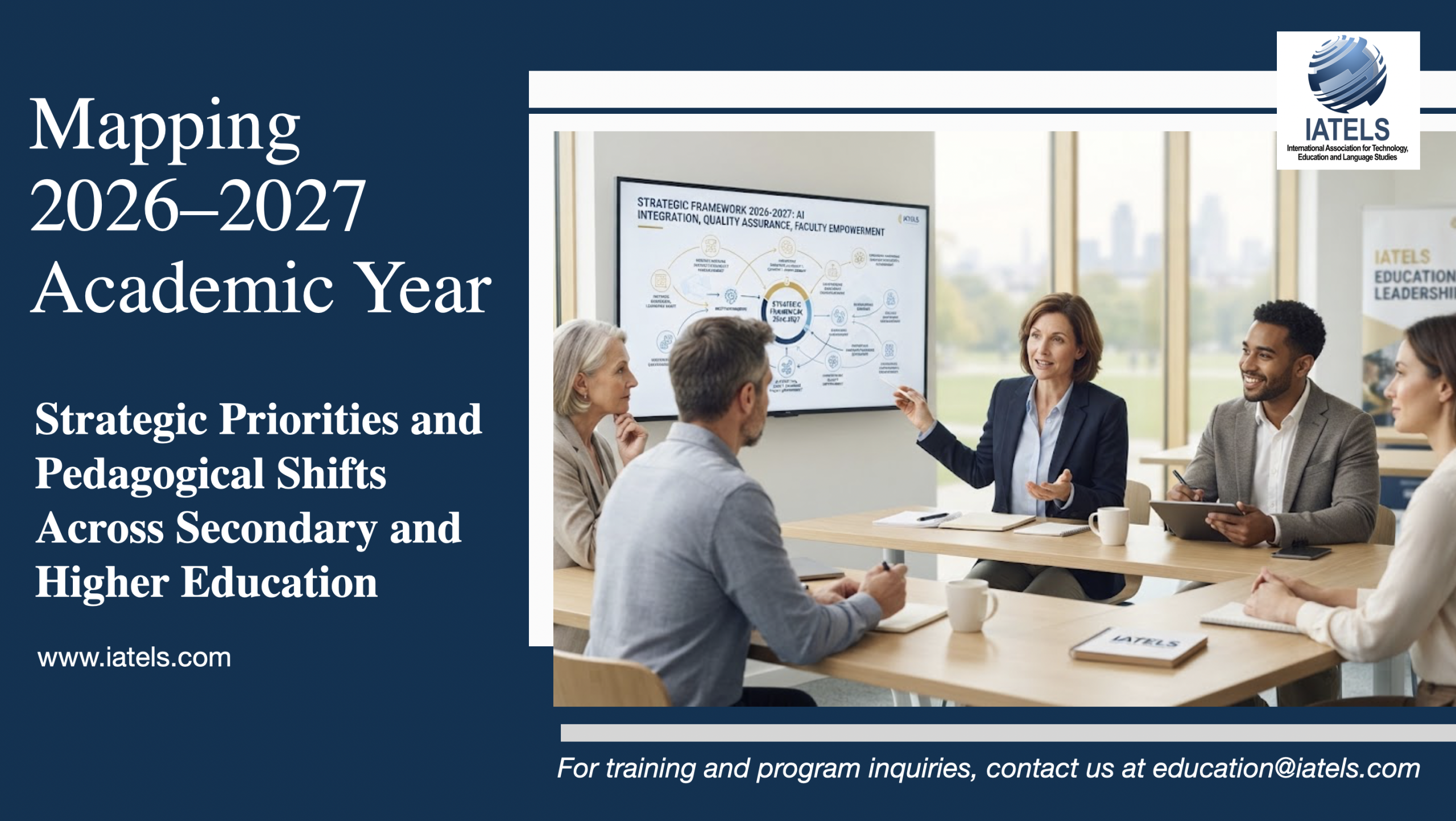
Strategic Priorities and Pedagogical Shifts Across Secondary and Higher Education
As the new academic year commences, the educational landscape across secondary (high school) and tertiary (university) levels is defined by a critical transition: moving past the initial wave of technological disruption into a phase of deliberate, structured integration.
Globally and regionally, institutions are no longer asking if technology and economic shifts will change education, but how to govern that change while safeguarding academic integrity, human agency, and long-term relevance.
High School Level: Building Cognitive Resilience and Digital Judgement
At the secondary education level, the focus this year centers on building cognitive resilience, redefining assessment, and instilling foundational digital judgement.
- Process-Based Evaluation & Anti-Plagiarism Guardrails: With generative AI widely accessible, high schools are shifting away from static, take-home written assignments that are easily automated. The emphasis is heavily on process-based evaluation—incorporating in-class checkpoints, multi-stage drafts, oral defenses, and live problem-solving to ensure true cognitive engagement.
- AI Literacy as a Core Competency: Rather than banning tools, secondary curricula are introducing explicit frameworks for ethical AI use. Students are taught how to treat AI as a collaborative sounding board rather than a ghostwriter, emphasizing critical information management, verification, and accountability.
- Strengthening "Power Skills": Regional curricula are doubling down on human-centric competencies that automation cannot replicate: structured communication, critical thinking, teamwork, and emotional regulation.
- Digital Well-Being and Attention Management: A major accent for high schools this year is combating digital burnout and declining attention spans. Schools are implementing clearer boundaries around device usage, treating digital hygiene and mental health support as core structural responsibilities rather than peripheral services.
University Level: Aligning Rigor with Real-World Utility
Higher education is facing intense pressure from students, employers, and policymakers to explicitly demonstrate return on investment (ROI) and real-world utility.
- Career Alignment and Outcome Metrics:Universities globally are overhauling strategic plans to tie institutional success directly to career readiness, graduate placement, and verified professional competencies.Degrees are increasingly expected to bridge the gap between theoretical study and immediate labor market demands.
- Modular Learning and Micro-Credentials:Driven by the demand for lifelong learning, universities are expanding stackable, modular credentials, short specialized courses, and executive upskilling pathways. This allows institutions to serve both traditional degree-seeking students and working professionals needing continuous adaptation.
- Cyber-Physical and Hybrid Pedagogies: Hybrid learning has matured from a pandemic-era emergency measure into a permanent, highly refined architectural model. Universities are leveraging immersive environments, remote digital laboratories, and cross-border collaborative research projects to globalize the student experience without requiring constant physical mobility.
- Research Integrity and Advanced AI Governance: At the postgraduate and research levels, universities are grappling with rigorous governance frameworks. The priority is establishing transparent institutional policies on data usage, authorship boundaries, and ethical reasoning in research, ensuring that automated tools augment rather than undermine scholarly rigor.
Regional Dynamics & Cross-Cutting Themes
- Sustainability as an Operational Standard: Environmental, climate, and social education is no longer treated as a superficial add-on or elective. Both high schools and universities are integrating sustainability criteria cross-curricularly, aligning with growing institutional accountability and student expectations.
- Bridging the Institutional-Industry Divide:Regionally, educational leaders are fostering tighter multi-stakeholder ecosystems (government-institution-industry) to ensure that curriculum design evolves dynamically alongside fast-moving technological sectors.
Here is the expanded, publication-ready article for the IATELS website, structured into two core sections: first, addressing the overarching pedagogical shifts and curriculum redesigns for the 2026–2027 academic year; and second, focusing on the operational realities across the European region.

Bridging Policy and Execution Across the European Region
Building directly on these framework shifts, educational leaders and institutions across the European region are finding that success this academic year depends on translating broad policy mandates into concrete, daily operational practices.
When looking closely at how secondary schools and universities are bridging policy and execution, several pragmatic accents emerge:
Operationalizing Institutional Quality and Accountability
- Moving Beyond Compliance: In wider European higher education, quality assurance (QA) agencies are shifting from a purely bureaucratic checklist model to outcome-based evaluations. Institutions are restructuring internal quality boards to prove continuous curriculum modernization rather than just periodic accreditation maintenance.
- Data-Driven Student Retention: With economic pressures affecting student persistence, secondary and tertiary institutions are deploying early-warning data analytics. Instead of waiting for final exam failures, schools are tracking engagement drops, attendance patterns, and formative assessment gaps to intervene proactively.
Curricular Agility vs. Rigidity
- Micro-Modularization in Traditional Frameworks: Universities are facing the challenge of embedding short, flexible micro-credentials inside rigid European Credit Transfer and Accumulation System (ECTS) structures. The compromise this year involves creating modular "stackable" blocks that allow degree students to acquire verified industry competencies without diluting core disciplinary depth.
- Pragmatic AI Integration: European secondary systems are moving past initial panic or total bans toward structured, discipline-specific AI policies. Rather than leaving educators to figure it out individually, institutions are issuing unified guidelines that explicitly state when and how generative tools can be used for brainstorming versus where human-only cognitive output is strictly mandatory.
Faculty Empowerment as the Core Bottleneck
- The Professional Development Mandate: All systemic changes—whether digital transformation, green curriculum integration, or process-based evaluation—ultimately hinge on the classroom teacher. Regional institutions are prioritizing internal faculty development workshops over passive policy rollouts, recognizing that educators need hands-on practice with new assessment tools and pedagogical models before they can successfully guide students.
IATELS Response – Evolving Training Courses and Programs
In response to these profound shifts across secondary and higher education, IATELS Education has systematically evolved its training courses, professional programs, and curriculum architectures to bridge the gap between academic theory and high-impact, real-world utility.
Rather than relying on passive information transfer, IATELS has restructured its educational approach around several core strategic pillars designed for the current academic term:
Shift from Passive Mastery to Active Skill Architecture
- Competency-Based Design:Programs are engineered to produce measurable, functional proficiencies rather than abstract knowledge. Syllabi focus heavily on task-based learning, simulation models, and immediate professional application.
- Granular, Result-Driven Modules:Courses (such as specialized ESP and professional development tracks) are broken down into practical, high-yield modules that target specific operational challenges—such as automated assessment, curriculum assembly, or targeted corporate communication.
Pragmatic and Proactive AI Integration
- Embedding AI Literacy as Standard Practice: IATELS training explicitly integrates technological tools rather than banning or ignoring them. Educators and professionals are taught precise prompt engineering for material design, automated feedback architectures to streamline evaluation, and digital conversation anchors.
- Enforcing Ethical Digital Citizenship:Alongside technical capabilities, programs emphasize strict standards of data privacy, human-centric evaluation, and academic integrity, ensuring technology acts as an amplifier of human agency rather than a replacement.
Modularization and Scalable Professional Pathways
- Stackable and Micro-Credential Frameworks: Reflecting the broader regional and global demand for lifelong learning, IATELS training models incorporate flexible, modular structures. This allows participants—whether university students, high school educators, or corporate specialists—to acquire verified competencies without disrupting their primary professional workloads.
- B2B and Career Alignment:Training programs are tightly aligned with market demands, equipping educators and institutional leaders with the practical business frameworks, pitch strategies, and micro-cohort scaling models necessary to thrive in competitive environments.
International Standards and Quality Assurance
- Global Benchmarking:All training paths and materials are governed by rigorous international quality standards, supporting institutions in moving beyond simple bureaucratic compliance toward outcome-based educational modernization.
- Collaborative Synergy:By connecting local talent with international expert mentorship, IATELS fosters cross-border academic and industrial cooperation, ensuring participants remain globally competitive and adaptable.
Shape the Future of Education With IATELS
The educational demands of the 2026–2027 academic year require more than passive adaptation—they call for proactive leadership, rigorous instructional design, and a steadfast commitment to human-centric, ethical innovation.
Whether you are an educator refining your secondary classroom methodologies, a university academic modernizing curriculum architecture, or an institutional leader navigating European quality frameworks, the ability to master these shifts is what separates thriving educators from the rest.
At IATELS Education, our professional development courses and specialized programs are specifically engineered to bridge theory and practice.
By equipping you with actionable, stackable micro-modules, advanced AI integration strategies, and internationally benchmarked frameworks, our training empowers you to stay ahead of the curve.
Step into the new academic year with confidence, elevate your professional competencies, and lead the transformation in your institution.
Explore our upcoming professional development courses and secure your place today by contacting our managers by filling out the form or via email education@iatels.com
Resources:
Official links and web resources corresponding to the primary European frameworks:
- Strategic Framework for the European Education Area (2021–2030):European Commission - Strategic Framework for the European Education Area
- The European Commission’s "Union of Skills" Initiative:European Commission - Union of Skills: One Year of Progress in Education
- Digital Education Action Plan & Ethical AI Guidelines for Educators:European Commission - Ethical Guidelines on the Use of Artificial Intelligence and Data in Teaching and Learning
International and regional policy sources that shape the educational priorities and trends across Europe and globally:
- Bologna Process & European Higher Education Area (EHEA):European Higher Education Area - Council of Europe / Bologna Follow-Up Group Framework
- OECD Education Policy Outlook: [OECD - Education Policy Outlook Analytical Observatory & Policy Trends](https://www.orcid.org / https://www.oecd.org/en/about/projects/education-policy-outlook.html)
- Eurydice Network Implementation Reports:Eurydice - European Commission Overview of National Education Systems and Policy Commitments
- Standards and Guidelines for Quality Assurance in the EHEA (ESG):EQAR / EHEA Official Quality Assurance Frameworks
Primary international frameworks and active reports from UNESCO and leading global higher-education tracking authorities:
- UNESCO Higher Education Global Trends Report:UNESCO IESALC - Higher Education Global Trends Report
Focuses on technological disruption, demographic changes, and the shift toward inclusive, equitable higher education standards globally. - UNESCO Global Education Monitoring (GEM) Report:UNESCO GEM Report Framework & Countdown to 2030
Tracks global targets on education equity, structural governance, and youth-led co-creation in learning systems. - UNESCO Policy Guidance on AI in Education:UNESCO - Guidance for Generative AI in Education and Research
The definitive international benchmark outlining human-agency safeguards, ethical boundaries, and institutional protocol for generative tools in secondary and tertiary systems. - UNESCO Recommendation on the Ethics of Artificial Intelligence:UNESCO - Ethics of AI Framework
Adopted by member states to govern data privacy, algorithm transparency, and equitable digital infrastructure development across global educational networks.
Policy frameworks of the world’s leading universities, several definitive institutional resources and frameworks outline how top global institutions manage AI governance, academic integrity, and pedagogical design:
- University of Oxford – Generative AI Guidance & Assessment Policy:Oxford Guidance on the Use of Generative AI
Outlines institutional boundaries distinguishing between permitted personal study support and strictly regulated summative assessment rules where AI authorization must be explicitly declared. - Massachusetts Institute of Technology (MIT) – Information Systems & Technology Generative AI Guidelines:MIT IS&T Generative AI Guidance
Establishes a risk-based data framework classifying institutional and research data into low-, medium-, and high-risk tiers to protect proprietary and confidential material from public consumer tools. - Harvard University – Provost & HUIT Generative AI Policy Framework:Harvard University IT Generative AI Guidelines
Provides school-specific guidance and sample syllabus templates for instructors to manage disclosure requirements, academic integrity, and data privacy across diverse faculties. - Digital Education Council – Global Institutional Best Practices Collection:Digital Education Council Best Practices Collection
A curated cross-institutional repository tracking how leading global universities operationalize transformation across assessment design, faculty capacity building, and curriculum development.
