By
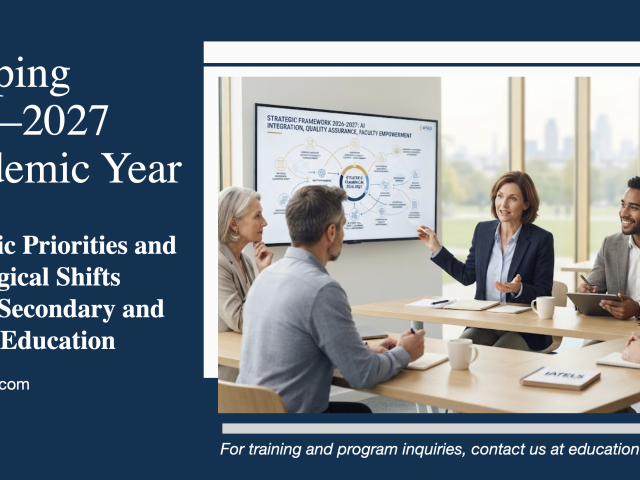
As the new academic year commences, the educational landscape across secondary (high school) and tertiary (university) levels is defined by a critical transition: moving past the initial wave of technological disruption into a phase of deliberate, structured integration. Globally and regionally, institutions are no longer asking if technology and economic shifts will change education, but how to govern that change while safeguarding academic integrity, human agency, and long-term relevance.
Read More...
By
A comprehensive meta-analysis of recent scholarship reveals that the landscape of Occupational Psychology and Organizational Behavior is undergoing a profound structural re-evaluation. Driven by rapid technological disruption, changing workforce demographics, and evolving psychosocial environments, researchers and practitioners are confronting a paradigm shift.
Read More...
By
Over the past several years, landmark policy frameworks, research reports, and strategic guidelines published by leading international bodies—including the International Labour Organization (ILO), the World Health Organization (WHO), the Organisation for Economic Co-operation and Development (OECD), the World Bank, the European Agency for Safety and Health at Work (EU-OSHA), and the United Nations Development Programme (UNDP)—have mapped out this seismic shift.
Read More...
By
The global education landscape is undergoing a profound paradigm shift driven by technological disruption, ecological crises, and geopolitical transformations. As institutions navigate this uncharted territory, the United Nations Educational, Scientific and Cultural Organization (UNESCO) serves as a vital compass, establishing global norms, policy frameworks, and ethical benchmarks.
Read More...
By
In an increasingly interconnected world, higher education is undergoing a profound paradigm shift. The traditional metrics of institutional success—once focused heavily on localized compliance, bureaucratic checklists, and rigid administrative audits—are being replaced by dynamic, global standards. Today, educational quality is measured by an institution’s ability to foster internationalization, cultivate cross-border trust, and deliver measurable value to a global society.
Read More...
By
For academic leaders, researchers, and institution directors, navigating the global educational landscape requires knowing who actually defines the standards. While many organizations implement local programs, only a select group of global entities shape international policy, curricula, and quality benchmarks.
Read More...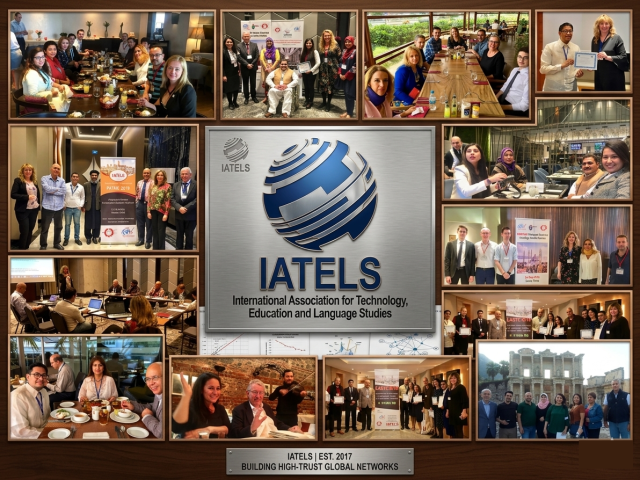
By
Nowadays working internationally is no longer just an "exciting mission"—it is a strategic necessity. As global student mobility and digital transformation accelerate, the ability to collaborate across borders ...
Read More...
By
There was a time when a business plan was a 50-page document that sat in a dusty drawer after being shown to a bank manager. Now that model is officially dead...
Read More...