POSTED BY:
COMMENTS:
0
POST DATE:
Elevating Higher Education: Navigating the Modern Landscape of International Quality Assurance and Curricular Excellence
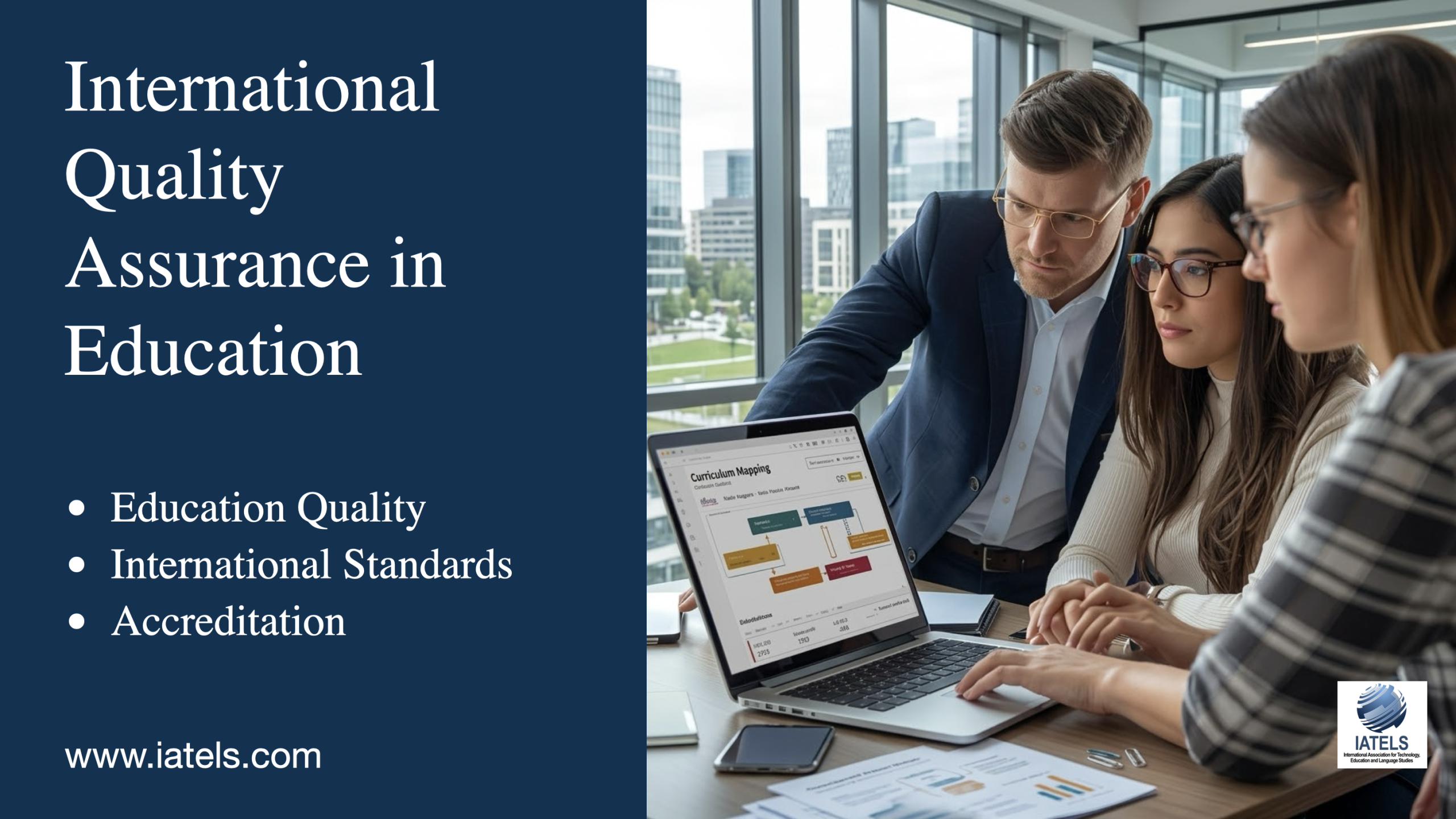
In an increasingly interconnected world, higher education is undergoing a profound paradigm shift. The traditional metrics of institutional success—once focused heavily on localized compliance, bureaucratic checklists, and rigid administrative audits—are being replaced by dynamic, global standards. Today, educational quality is measured by an institution’s ability to foster internationalization, cultivate cross-border trust, and deliver measurable value to a global society.
At IATELS (International Association for Technology, Education and Language Studies), we align our initiatives with the evolving standards of international quality assurance frameworks, such as the European Standards and Guidelines (ESG). We help universities and educational centers transform these rigorous global criteria into practical, everyday excellence, ensuring that institutions are fully prepared to meet the demands of modern international audits and accreditation.
The Methodological Foundations of Modern Quality Assurance
Modern quality frameworks are rooted in the belief that quality is an ongoing, internal culture rather than an occasional external inspection. This approach relies heavily on the European Standards and Guidelines for Quality Assurance (ESG), which establish a shared European framework for higher education systems. This methodology is built upon three essential pillars:
- Internal Quality Assurance: Universities are expected to establish robust, internal mechanisms to continuously monitor, evaluate, and improve their own programs, teaching methods, and student assessment procedures.
- External Quality Assurance: National and international agencies (such as ENQA, ARACIS, and MAB) evaluate how effectively these internal systems operate. This ensures that the institution remains publicly accountable and that its degrees carry weight internationally.
- Institutional Autonomy and Public Trust: The ultimate goal of these methodological frameworks is to foster a system of mutual recognition. By demonstrating adherence to shared international standards, institutions build the necessary trust to facilitate student mobility, credit transfers, and joint degree programs across borders.
The primary methodological basis for these frameworks is:
- The Standards and Guidelines for Quality Assurance in the European Higher Education Area (ESG): This is the gold standard for European quality assurance. It provides a three-pillar framework:
- Internal Quality Assurance: How institutions self-evaluate and maintain standards.
- External Quality Assurance: How national agencies evaluate institutions.
- Quality Assurance Agencies: Standards that the agencies themselves (like Ukraine’s NAQA, Romania's ARACIS, or Hungary's MAB) must meet to be registered.
- Institutional Autonomy paired with Public Accountability: The methodology shifts the responsibility of quality primarily to the higher education institutions themselves, using external agencies as facilitators of trust rather than rigid inspectors.
- Cross-Border Quality Assurance (CBQA) Guidelines: This relies on mutual recognition and trust-building frameworks to ensure that qualifications and educational standards are comparable across national borders.
Key Trends Shaping Education Quality Evaluation
As national quality assurance agencies align more closely with European and global standards, several cutting-edge trends have emerged that dictate how higher education is evaluated:
From Compliance to Trust-Building and Value Creation
Accreditation bodies are shifting their focus away from mere administrative box-checking and toward genuine "trust-building" and "value creation". Evaluations now examine how effectively an institution contributes to regional development, how well it integrates with international academic networks, and the tangible value its programs offer to students and the broader global economy.
Internationalization as a Structural Quality Metric
Internationalization is no longer treated as a secondary, extracurricular ambition. It is now evaluated as a central pillar of educational quality. Reviewers analyze how well an institution integrates global perspectives into its curriculum, coordinates cross-border research projects, hosts international academic events, and prepares its students to operate in globalized environments.
Teacher Development and Methodological Modernization
A university's educational output is directly linked to the strength of its faculty. Modern quality frameworks place immense weight on the continuous professional development of teaching staff. Institutions are expected to actively support their faculty in mastering modern pedagogical methodologies, integrating educational technology into the classroom, and improving their professional English communication skills.
Main Criteria for Evaluation
Under these modern frameworks (ESG/ENQA), the core criteria used to evaluate educational quality include:
- Student-Centered Learning, Teaching, and Assessment: Evaluation of whether teaching methods encourage active student participation and whether assessment procedures are fair, consistent, and transparent.
- Internationalization of the Curriculum and Faculty: Looking at the level of global integration, joint international projects, and cross-border research collaborations.
- Continuous Professional Development of Staff: Assessing whether teaching staff have access to pedagogical training, modern methodological workshops, and language skills development.
- Information Management and Public Transparency: Evaluating how institutions collect, analyze, and use data to monitor their programs, and how transparently they share this information with the public.
How IATELS Integrates into the Quality Assurance Workflow
As an international academic association, IATELS is uniquely positioned to help universities meet these stringent international quality criteria. We integrate directly into an institution's quality assurance workflow through three core pillars of support:
Facilitating Internationalization and Strategic Partnerships
We provide universities with a readymade gateway to global academic collaboration. Through IATELS, institutions gain documented proof of international networking, joint project coordination, and collaborative research opportunities—substantially strengthening their self-assessment portfolios during national and international accreditation audits.
Certified Faculty Professional Development
To satisfy the strict staff-development criteria of modern quality frameworks, IATELS designs and delivers certified pedagogical workshops, educational technology integration seminars, and English language training. We empower your faculty with up-to-date, practical methodologies, directly raising the institutional standard of instruction and providing clear documentation of continuous professional growth.
Practical Language and Curricular Alignment
Our specialized unit, English IATELS, works directly with universities to develop customized, profession-tailored English programs and custom-branded textbooks. By auditing and aligning your language curricula with global benchmarks, we ensure that your students are equipped with the exact communication skills demanded by the global market, demonstrating a clear link between institutional curriculum design and student employability.
Partner with IATELS for Global Excellence
Achieving international standards of educational quality requires more than internal effort—it requires a committed, global partner. IATELS provides the network, the training, and the curriculum support necessary to elevate your institution's profile on the world stage.
We invite universities, colleges, and educational leaders to explore how a partnership with IATELS can support your upcoming accreditation goals and drive meaningful, international growth.
Contact us today at info@iatels.com or siatels.association@gmail.com to discuss strategic collaboration opportunities.
You can also reach out to our managers by filling out the form,